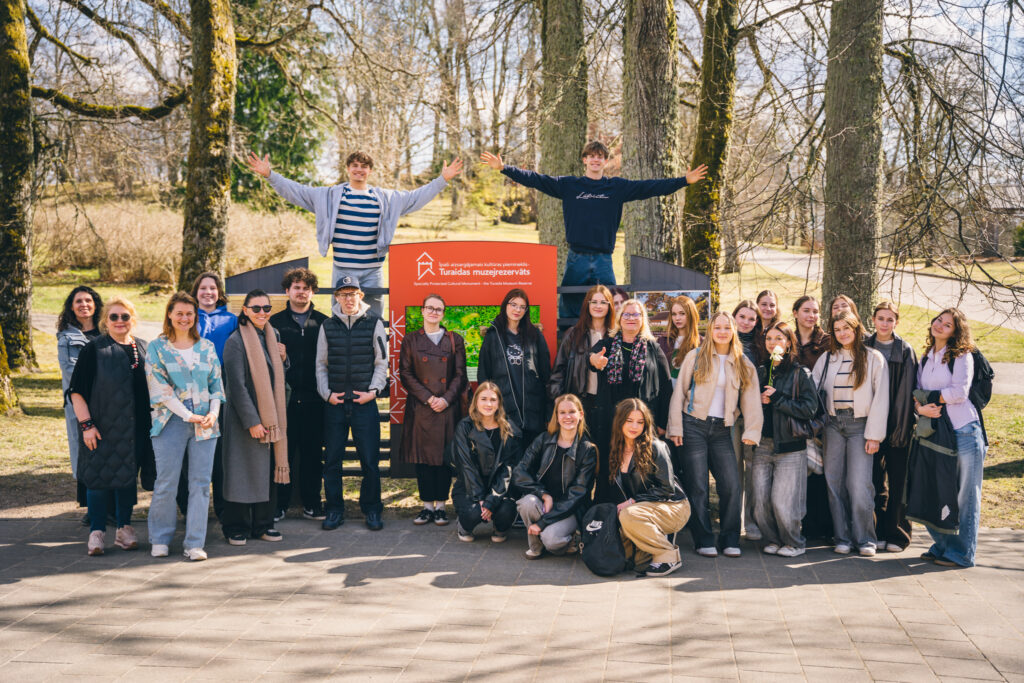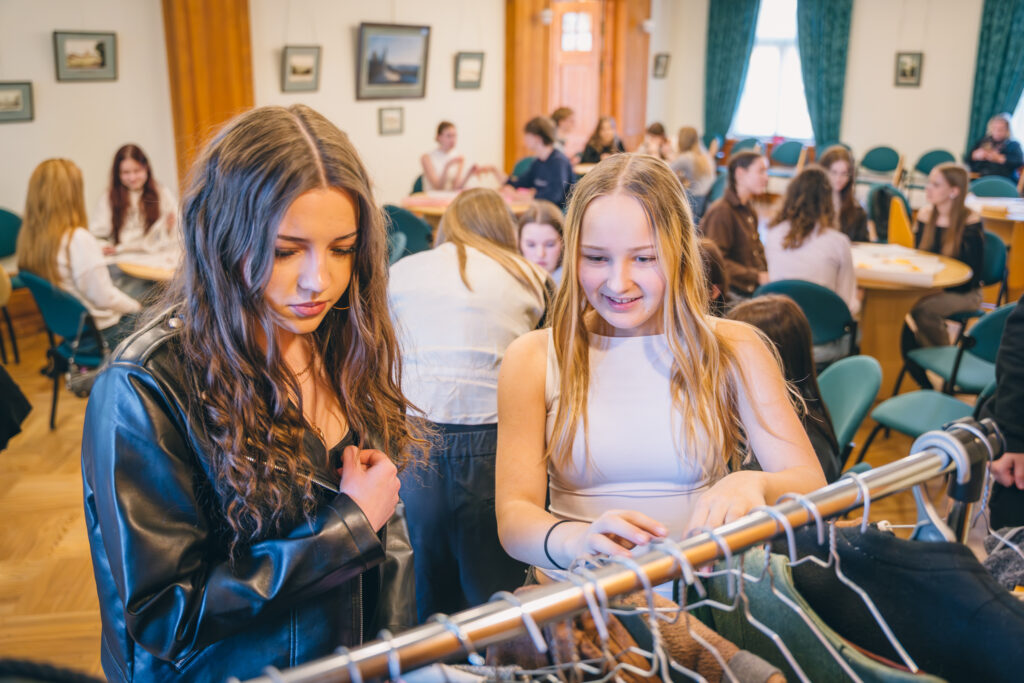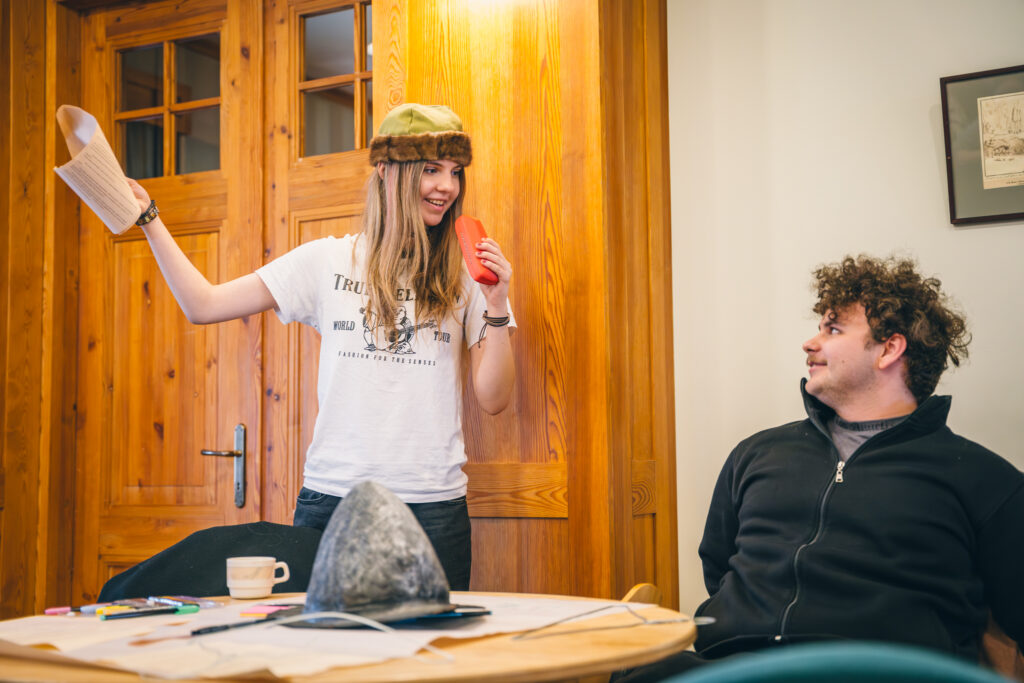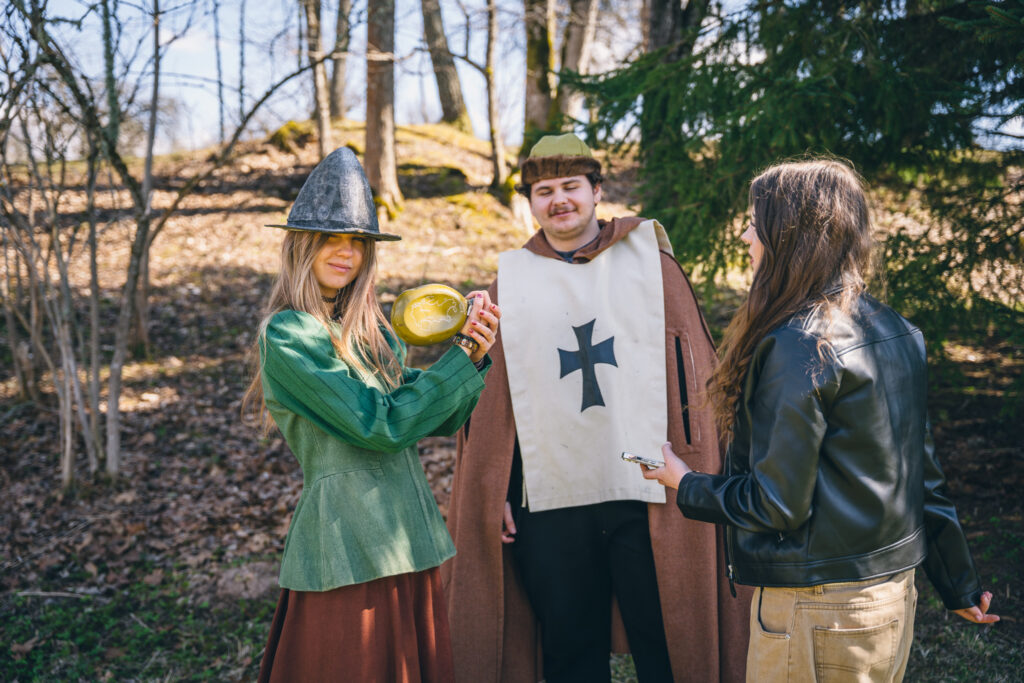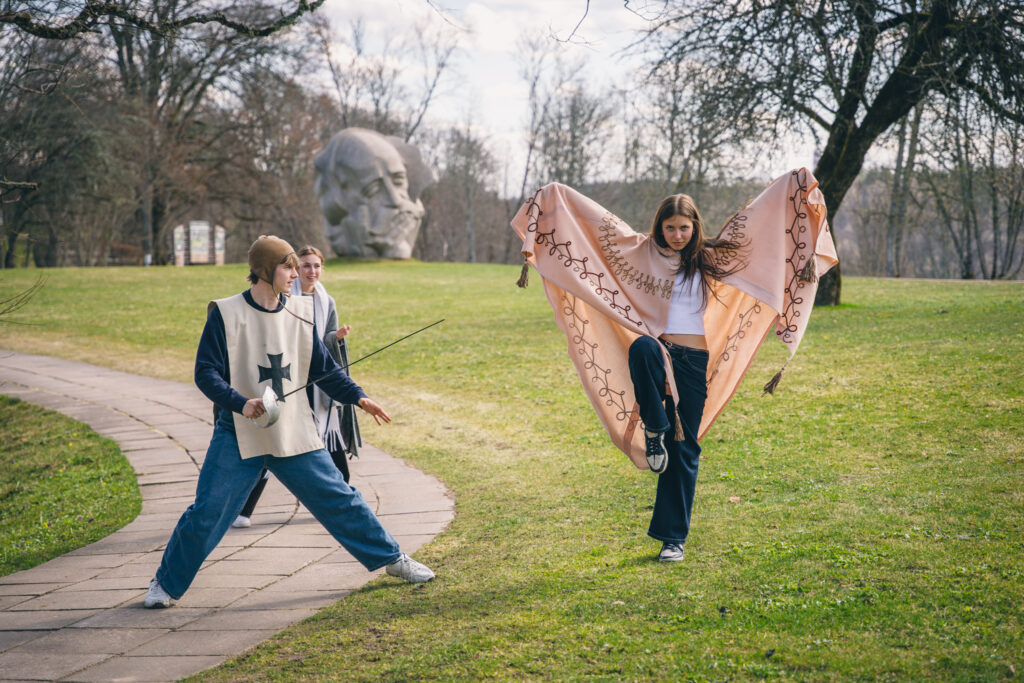

On 14 April 2026, an audiovisual workshop for young people was held at the Turaida Museum Reserve within the framework of the Cultural Heritage Label project Heritage Challenge – 2.
The project Heritage Challenge – 2 aims to explore effective approaches to engaging young people with cultural heritage, with particular emphasis on whether short-form video narratives on social media platforms can serve as a meaningful tool for fostering youth interest in this field. The project brings together three partners—Das Oderbruch (Germany), The Colonies of Benevolence (Belgium and the Netherlands), and the Turaida Historical Centre, Latvia. Within this collaboration, each partner exchanged three cultural heritage stories: two were shared with partner institutions, while one remained within the originating organization, and two new stories were received from partners.
Collaboration with RTU Liepaja New Media and Audiovisual Art students
As part of the project activities, students from the 10th and 11th grade creative industries classes of Sigulda Secondary School were actively involved. In addition, second-year BA students Amanda Treilība and Oļesja Odariča from the New Media and Audiovisual Arts programme at Riga Technical University, Liepāja Academy, participated as social media experts. Both students bring notable experience in graphic design, audiovisual production, and youth-oriented work within the NGO sector.
Prior to the workshop, on 30 March 2026, the invited experts conducted an online seminar titled “Video in the Social Media Environment”, equipping participants with both technical skills and content development strategies essential for creating engaging short-form video. Furthermore, on 13 April 2026, they delivered an international seminar, “Interaction with Young People in the Digital Era”, for members of the European Heritage Label network, presenting the Turaida Museum Reserve’s expertise in youth engagement through digital platforms.
Audiovisual workshop activities at Turaida Museum Reser
The audiovisual workshop took place on 14 April 2026 at the Turaida Museum Reserve. During the day students from the 10th and 11th grade creative industries classes of Sigulda Secondary School experienced several workshop sections. First, they opened a special letter that they had received from European Heritage label members in project – Oderbruch Museum (Germany) about solder field flacon, Stichting Kempens Landschap (the Netherlands) about Colonies of Benevolence and one letter from Turaida Museum Reserve that included a legend about the Rose of Turaida.
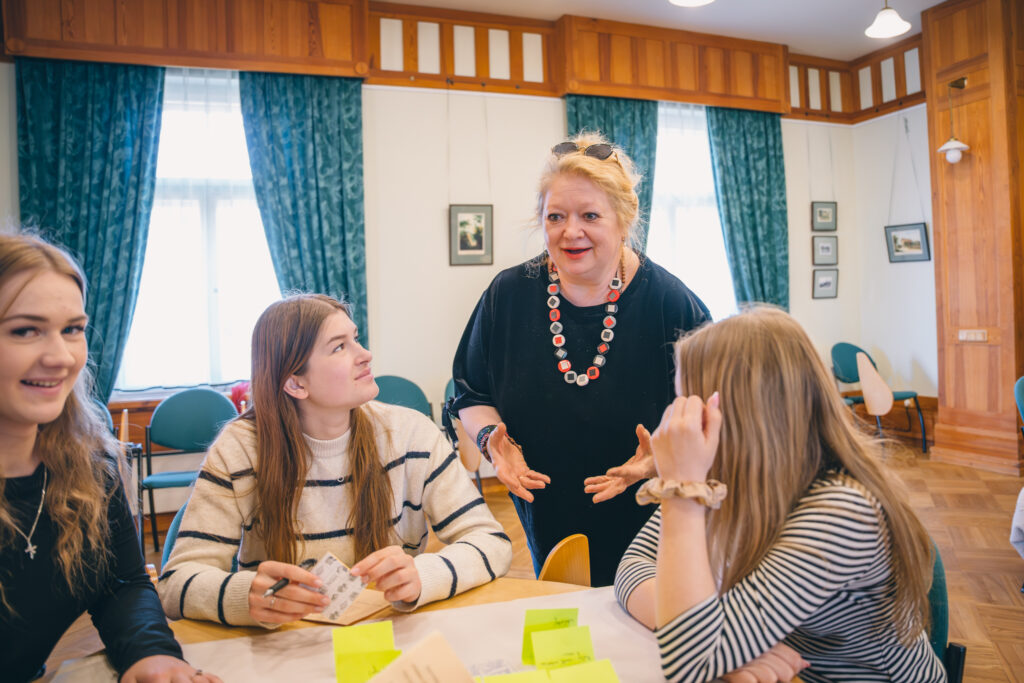
Each letter told a story about special heritage object with invitation to make a short movie uncovering the challenges of heritage from youth perspective. Workshop included thematic sessions with museum specialists. One group of students met with Mg. hist. Justīne Timermane, who introduced the Rose of Turaida memorial site and ongoing archaeological research at Turaida Church Hill.
A second group engaged with Head of Collections and Curator Aija Dzene, who presented the narratives and preservation practices related to historical artefacts, alongside historian Dr. hist. Guntis Zemītis, who discussed the historical significance of a soldier’s water flask in the context of military service. A third group participated in a session led by Dr. hist. Edgars Ceske, who offered a comparative perspective on the Dutch “Colonies of Benevolence” and tenant farmsteads, complemented by an inspiring account of a Latvian farmer.
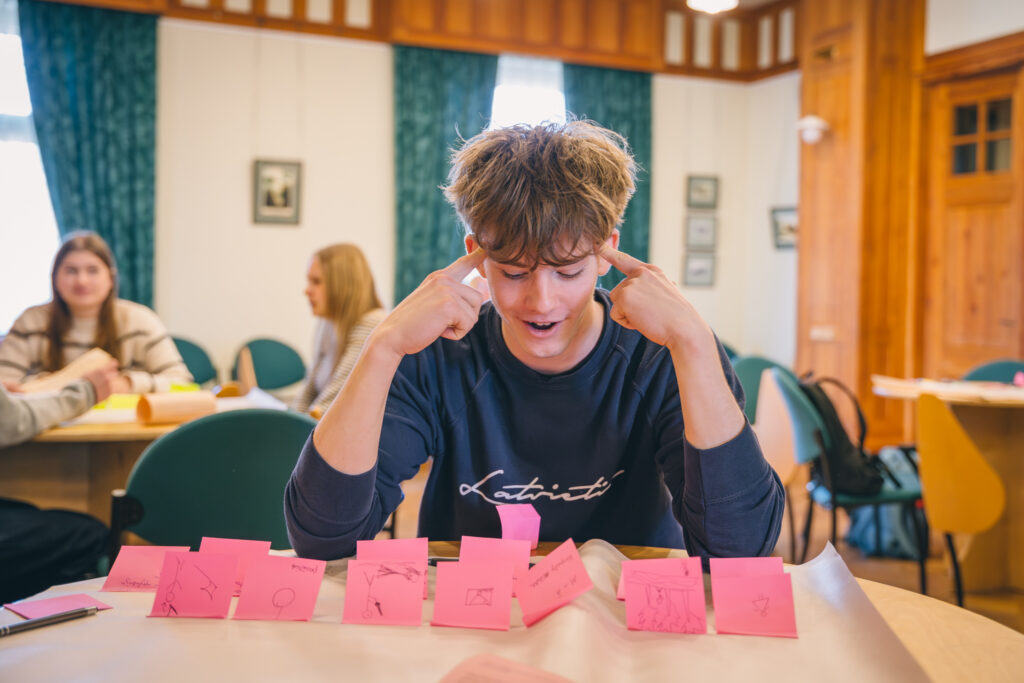
Adopting a peer-to-peer learning (P2P) approach, young documentary film director Zane Sabule facilitated a storyboard workshop, encouraging participants to develop their own visual storytelling concepts. To further stimulate creativity, a short improvisation workshop was conducted after lunch by Leonarda Ķestere-Kļaviņa, Head of the Development and Communication Department and producer at the Turaida Museum Reserve.
The program of workshop was developed by Rūta Dzene, Education Specialist at the Turaida Museum Reserve. The full-day event was coordinated and led by Gunta Zaķīte, Head of the Communications and Educational Work Department and project manager of Heritage Challenge – 2 in Latvia. The filming process was supported by the museum’s photographer, Edgars Semanis, who ensured the production of high-quality visual material.
Conclusion
The audiovisual workshop demonstrated clear mutual benefits for both the Turaida Museum Reserve and the participating students. For the young participants, the experience fostered practical skills in visual storytelling, critical thinking, and digital content creation, while strengthening their ability to work collaboratively, taking initiative, and transforming historical information into engaging narratives.
Through direct interaction with museum specialists, pupils developed a deeper understanding of cultural heritage and learned to interpret complex content in a contemporary and accessible format. For the Turaida Museum Reserve, the workshop provided valuable insights into how younger audiences perceive and engage with heritage, while also generating fresh, youth-driven perspectives that can inform future communication strategies. Overall, such workshops serve as an effective platform for knowledge exchange, creativity, and meaningful engagement, reinforcing the relevance of cultural heritage in the digital age.
Gratitude for cooperation
The organisers would like to express their sincere gratitude to Vineta Šķestere, Deputy Principal for Extracurricular Activities at Sigulda Secondary School, and Eva Tilibа, Head of the Creative Industries study programme, for their valuable cooperation. Appreciation is also extended to Anta Brača, Head of the More Battle Museum, for providing significant historical artefacts that enriched the workshop experience.
Special thanks are due to the creative industries students, whose enthusiasm and creativity brought vitality to the Turaida Museum Reserve throughout the filming process. The organizers look forward to the completed audiovisual works and to sharing the young participants’ interpretations of cultural heritage narratives.
Foto: Edgars Semanis